Brush Guides
Natural vs Synthetic Makeup Brushes: Which Fiber Is Right for Your Routine?
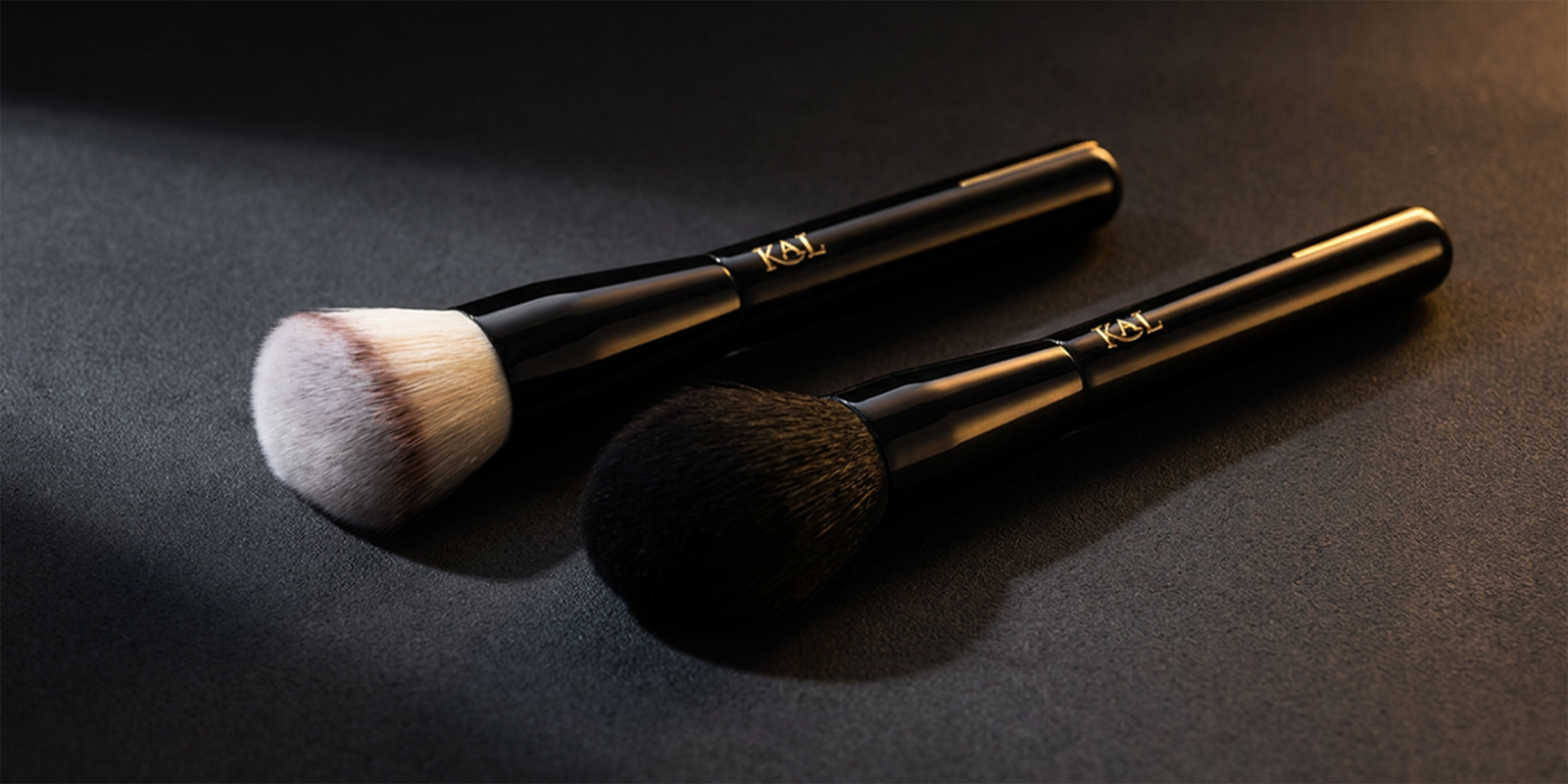
Natural vs Synthetic Makeup Brushes
Which Fiber Is Right for Your Routine?
By Lana kali · July 2026 · 5 min read
Neither fiber is universally “better.” Natural hair and synthetic fiber each excel at different product types and finishes. Understanding the difference helps you build a brush collection that performs the way you expect, every time.
Natural vs Synthetic Makeup Brushes: The Core Difference
Natural hair, like the Sokoho goat hair used in Kali LA’s LK 103, LK 105, and LK 107, has microscopic cuticle scales along each fiber. These scales grip loose powder pigment and release it gradually, producing the softest, most diffused finish for powder products. Synthetic fiber is smooth and non-porous, so it does not absorb liquid or cream formulas. Instead it sits product on the surface of the bristle, letting you apply foundation, concealer, and cream blush without wasting product into the brush itself.
When people ask about natural vs synthetic makeup brushes, the real question is usually about formula, not quality. Powder, mineral, and loose pigment products need a fiber that can pick up a light, even layer and deposit it gradually, which is exactly what natural hair does well. Liquid, cream, and gel products need a fiber that will not soak product into the ferrule, which is where synthetic fiber, such as the BASF-engineered synthetic filament used in LK 101, takes over. Choosing between natural vs synthetic makeup brushes for a specific step is less about brand preference and more about matching fiber behavior to product texture.
Microscopic cuticle scales grip and release powder gradually
Softest possible feel on skin
Best for setting powder, blush, bronzer, highlighter
Ideal for a diffused, airbrushed powder finish
Sourced responsibly, cruelty free
Non-porous, does not absorb liquid or cream formula
No product waste, everything reaches the skin
Best for foundation, concealer, cream blush, cream contour
Easier to clean, dries faster
100% vegan, zero animal involvement
Best Uses for Each Fiber
Sokoho goat hair diffuses powder evenly with no harsh lines, the softest finish available.
Cuticle scales control pigment payoff so color builds gradually instead of applying in one dense pass.
Fiber sits product on the surface instead of absorbing it, giving full coverage without waste.
Smooth fiber blends cream formulas without soaking them up, and cleans easily between uses.
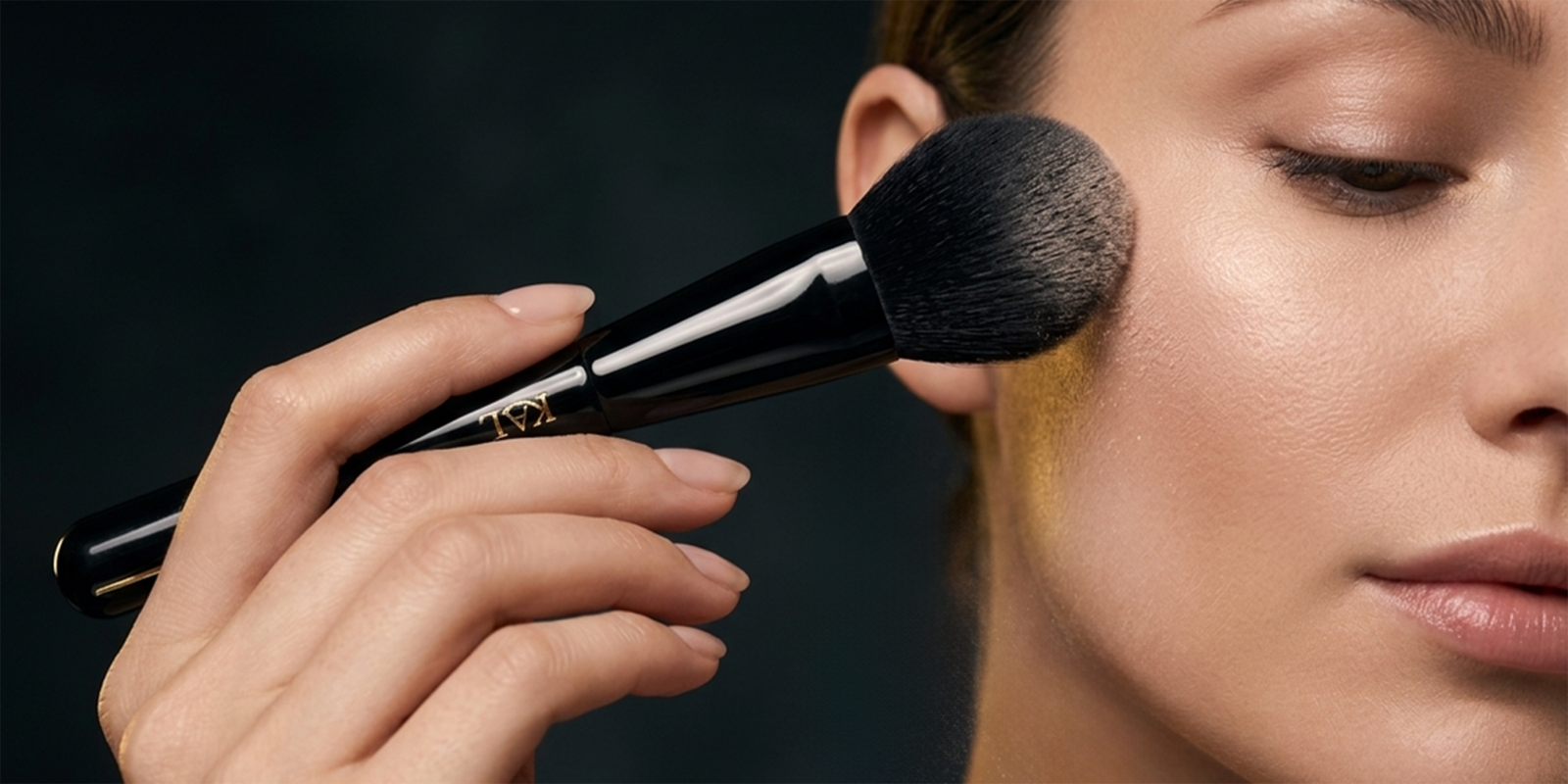
A well-built collection uses both: natural hair for powder softness, synthetic fiber for liquid precision.
Kali LA’s Synthetic Option
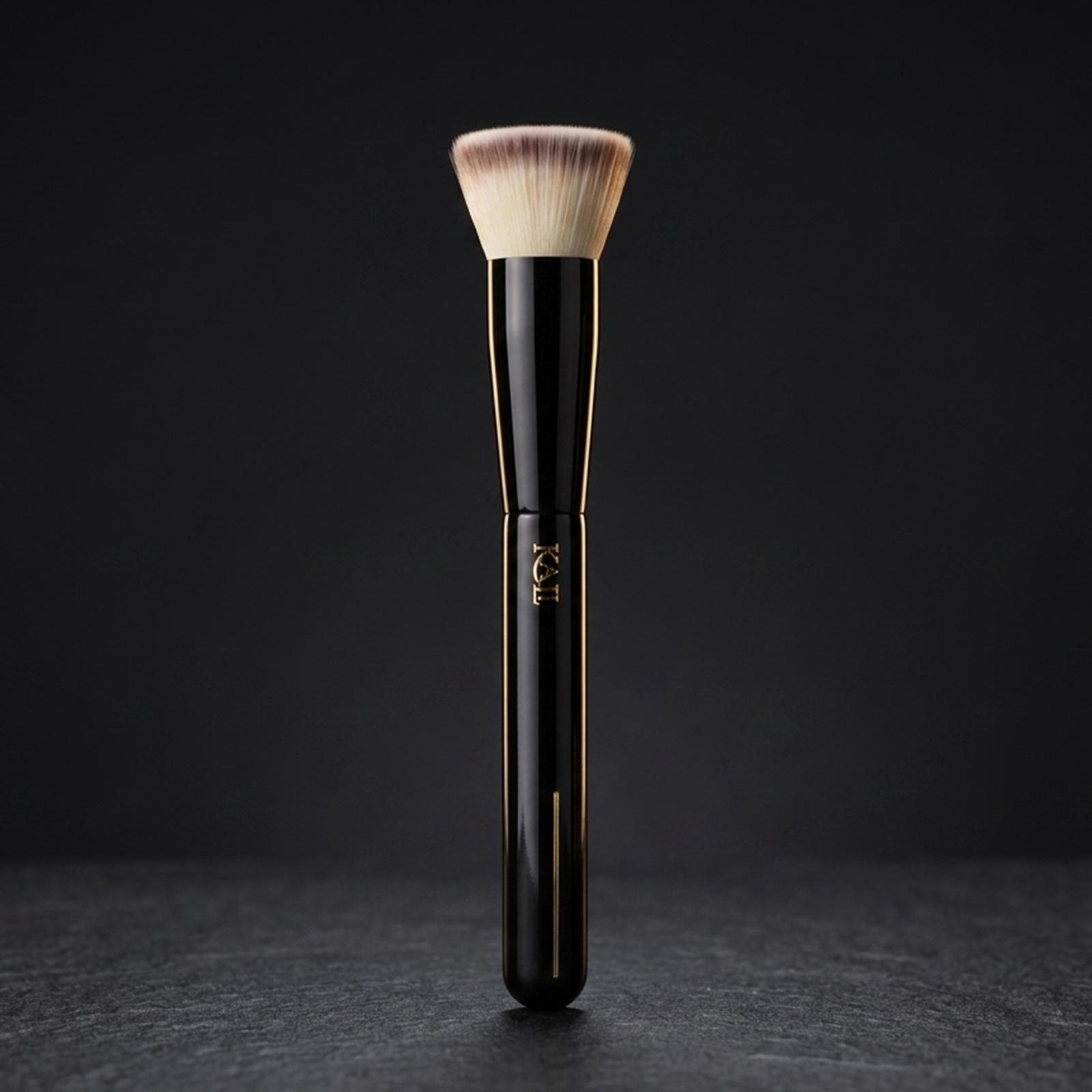
LK 101, Foundation Brush
Premium BASF synthetic vegan fiber. Streak-free liquid and cream foundation application. Zero animal involvement.
Shop LK 101 →Frequently Asked Questions
Is natural or synthetic better for makeup brushes?
Neither is universally better. Natural hair like Sokoho goat hair is best for powder products, while synthetic fiber is best for liquid and cream formulas. A complete collection typically uses both.
Why does synthetic fiber work better with foundation?
Synthetic fiber is non-porous, so it does not absorb liquid product. This means less product waste and more even application than natural hair, which can soak up liquid formulas.
Is Kali LA’s synthetic brush cruelty free?
Yes. LK 101 uses premium BASF synthetic vegan fiber, with zero animal involvement.
Can I use a natural hair brush with liquid foundation?
You can, but the bristles will absorb some product and the finish may be less even. A synthetic brush like LK 101 is purpose built for liquid and cream formulas.
How should I clean synthetic vs natural brushes?
Both should be cleaned weekly with a gentle cleanser and lukewarm water. Synthetic fiber dries faster and is slightly easier to fully rinse clean than natural hair.
Written by Lana Kali, the Kali Los Angeles team, luxury makeup brush specialists based in Los Angeles, California
Pingback: Basic Skincare Routine Effectiveness 2026
Pingback: Maintaining A Healthy Skincare Routine 2026